Short breaks for Caregivers: Being a caregiver can be one of the most rewarding and most challenging times we face. In order to continue to care for family members who require additional support, we must remember to care for ourselves as well.
Caring for a loved one can be very rewarding, but can also be stressful, and even overwhelming at times, due to a lack of balance. Everyone needs time to do the things they need to do, like go grocery shopping or to an appointment. However, it is also important to make time to do the things you want to do and that is meaningful to you and your family, such as hobbies or activities with friends.
The topics covered on this page help you to explore and plan for taking small breaks (or respite) from your role as a caregiver or carer. Research shows that respite which is personalized and purposely planned benefits not only caregivers but all family members, including siblings or a spouse or partner.
This Guide and accompanying tools were developed in partnership with the ARCH National Respite Network and Resource Center Guide and funded by the Administration for Community Living.

Webinar presented by Jane St. John in Collaboration with ARCH National Respite Network
This webinar explored how to use the LifeCourse Tools for Respite during the coronavirus pandemic to help providers offer respite safely, and to guide family caregivers in using respite safely. We also demonstrated how to use the tools to help develop strategies for family caregivers and care recipients to cope with the pandemic. Examples were presented on how the tools can be used to help family caregivers find balance as a caregiver, and help both caregivers and care receivers find alternative respite options and ways to socially distance and still live the good life!
This webinar will provide an introduction to the LifeCourse Respite tools for new users and also serve as a refresher for those who are familiar with them. An overview of the LifeCourse Tools, including the LifeCourse Respite Guide, the Respite Portfolio, and the Integrated Supports Schedule, with guidance on how to use the tools most effectively to help you assist the families you work with to get a well-deserved break, was provided.
It is important for caregivers and their families to make a plan to incorporate respite into their lives long before exhaustion, isolation and feelings of being overwhelmed have set in. Advanced planning also allows for respite to be customized to meet the unique needs of the family members and provide enjoyable and meaningful experiences for everyone.
The Respite Guide and accompanying toolkit are intended for anyone in a family or relationship that is providing the majority of care or support to a person who needs additional support, and are also referred to as “caregivers” or “carers” throughout this guide. It is focused on the topic of respite, or short breaks for caregivers.
Completing the star will help you think about your own life and the supports and resources you have available in each of the star categories that could help make respite possible or a better experience for you and your loved one.
You and your loved one have worked hard to make plans for successful respite and identify resources that can help you reach your vision of good respite. The schedule can help you see the need to take a break as well as find time to incorporate respite into your life.
Completing the star will help you think about your own life and the supports and resources you have available in each of the star categories that could help make respite possible or a better experience for you and your loved one.
Portfolio for Exploring Respite
The Respite Portfolio can help organize and express a vision for caregivers. Designed as a tabloid-sized (17 inches wide by 11 inches high) booklet, it includes the:
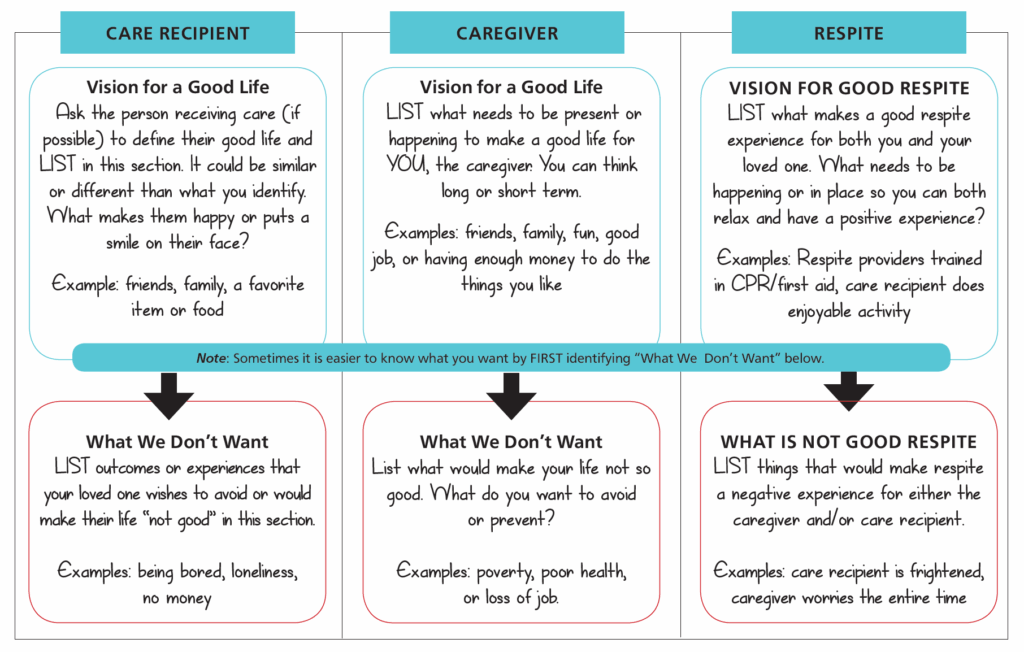
Having a clear picture of your current situation can help you know where you are starting, how using respite could improve your life, think about what you would do with a short break, and identify what needs to change.
Life Trajectory: Respite
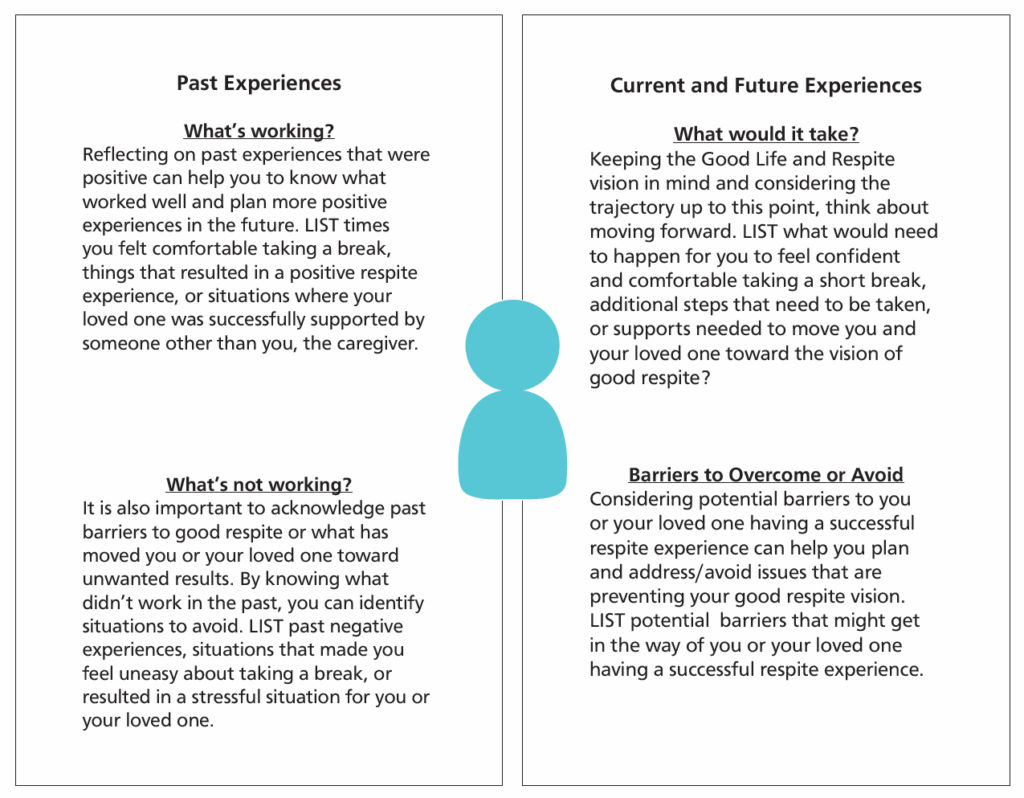
The Trajectory is the path in life that will either lead you toward your good life or push you toward what you don’t want. Life experiences and events affect the trajectory. Some experiences help move the trajectory toward the desired good life outcomes. Others might move the trajectory toward unwanted results. It’s important to reflect on past life experiences, both positive and negative, to know what to continue or build upon, and what to avoid or stop doing. With every choice, decision, experience, or interaction with others, consider which direction it nudges the trajectory.
Integrated Supports Schedule: Respite
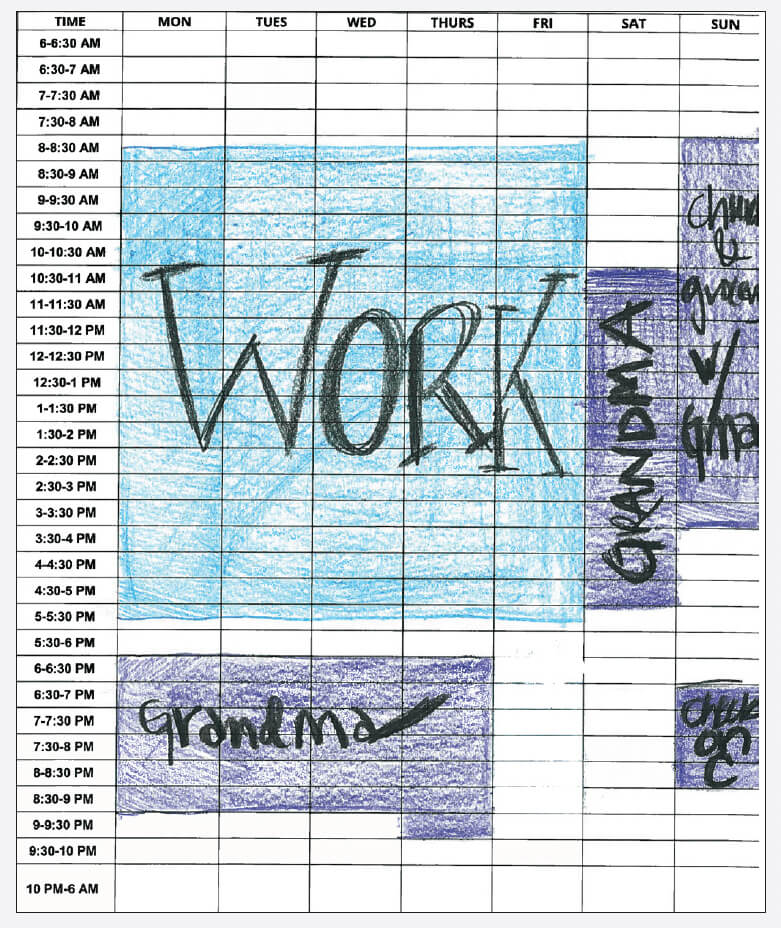
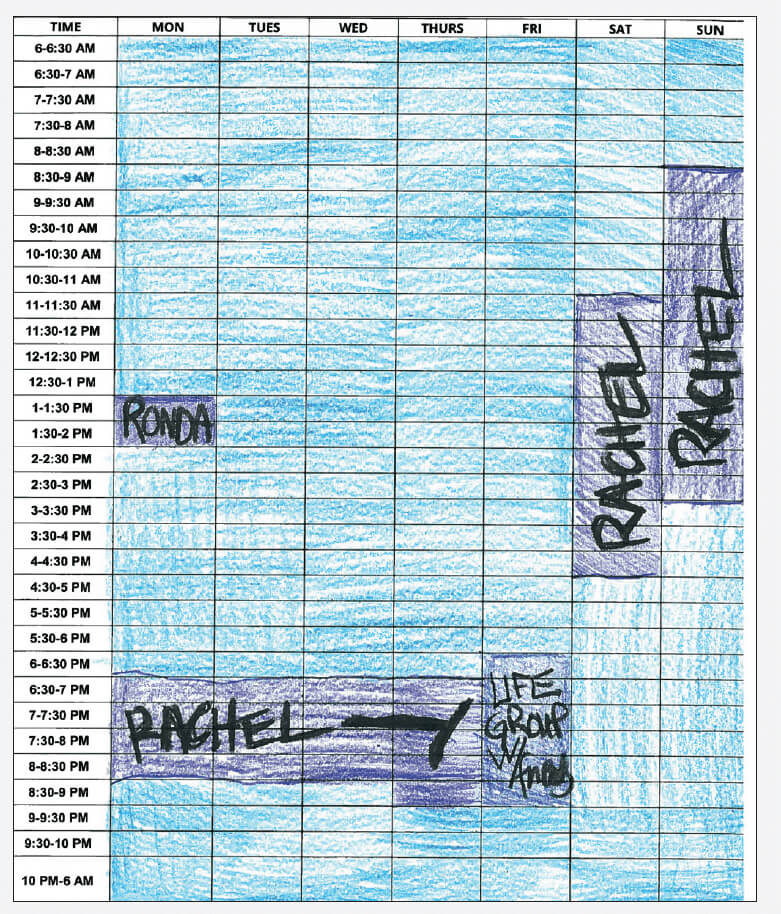
The schedule can help you see the need to take a break as well as find time to incorporate respite into your life. Fill out your own schedule as it is now so you have a good visual of when you are providing care and when you are meeting other life obligations. The schedule can also help you see how and when your loved one is supported by yourself and others, and find windows of time when it might make sense for you to create respite opportunities.