Health Care Transition

Health care transition is the process of moving from pediatric care to adult care. Part of health care transition is deciding about your own health. It also means learning about your rights and responsibilities around health care.

Transitioning to Adult Health Care with Confidence

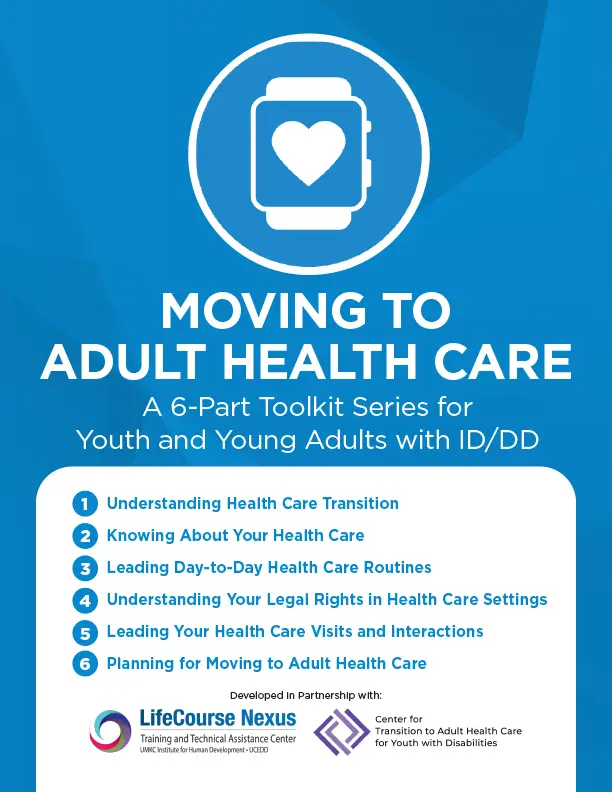
To help prepare youth and young adults with intellectual and developmental disabilities (ID/DD) for their health care transition, six toolkits were developed under the leadership of Family Voices, in collaboration with the LifeCourse NexusSPAN, and Got Transition. This project is supported by the Administration of Community LivingU.S. Department of Health and Human Services. For additional health care transition resources for youth and young adults with ID/DD, their families/caregivers, and clinicians and direct support workers, visit the Center for Transition to Adult Health Care for Youth with Disabilities.

What is a Toolkit?

The six toolkits aim to help you learn and get ready for moving to adult health care and living a healthy adult life. They will give you lots of information and resources to help you during this time of transition. Each toolkit will focus on a different topic about health care transition.

Each toolkit consists of a Side-by-Side Guide, EZ-Reader, tool, and tip sheet.

  • The Side-by-Side Guide helps you learn, discuss, and take action on health-related topics and includes tips for supporters.
  • The EZ-Reader provides easy-to-understand information about specific topics in the Side-by-Side Guideusing short sentences and pictures.
  • The tool is an activity to help you prepare for your health care transition.
  • The tip sheet helps you know how to fill out and use each tool.

Understanding Health Care Transition

Side-by-Side Guide

Understand a change is coming, what transition and health care transition mean, and start thinking about life as an adult and healthy living.

Click here for Resources from this Side-By-Side Guide.

EZ-Reader

Learn about becoming an adult and what it means for your health care.

Click here for Resources from this EZ-Reader.

Tool

Think about what’s important to you regarding your doctors and health care workers. Consider what you don’t want in your adult health care.

Tip Sheet

Provides an overview of why and how to use the Moving to Adult Health Care: Life Trajectory.

Knowing About Your Health Care

Side-by-Side Guide

Understand your health and disabilities, and the different kinds of doctors and health care workers you might see as an adult.

Click here for Resources from this Side-By-Side Guide.

EZ-Reader

Learn about the different kinds of doctors and health care workers you might see as an adult.

Click here for Resources from this EZ-Reader.

Tool

Keep track of your doctors and other health care workers.

Tip Sheet

Provides an overview of why and how to use the Medical Provider List.

Leading Day-to-Day Health Care Routines

Side-by-Side Guide

Learn about doing the everyday things you’ll do for your health such as healthy eating, staying active, regular checkups and medication, and mental well-being.

Click here for Resources from this Side-By-Side Guide.

EZ-Reader

Learn about taking and organizing the medication you need —on your own or with help —to stay as healthy as possible.

Click here for Resources from this EZ-Reader.

Tool

Keep track of your medications, including when to take it and why you take it.

Tip Sheet

Provides an overview of why and how to use the Medication List.

Understanding Your Legal Rights in Health Care Settings

Side-by-Side Guide

Learn about health care rights and laws, adult decision-making, and how to get the help you may need with making health care decisions.

Click here for Resources from this Side-By-Side Guide.

EZ-Reader

Learn about making your own decisions when you are an adult and how you can choose friends, family, and others to help you with making decisions.

Click here for Resources from this EZ-Reader.

Tool

Explore where and why you might need support when making decisions about your health and health care.

Tip Sheet

Provides an overview of why and how to use the Exploring Decision-Making Supports for Health

Leading Your Health Care Visits

Side-by-Side Guide

Learn how to advocate for yourself in health care, take the lead, and make your voice heard during health visits. 

Click here for Resources from this Side-by-Side Guide.

EZ-Reader

Learn about scheduling an appointment with your health care provider. 

Click here for Resources from this EZ-Reader.

Tool

Helps you prepare for an appointment, stay organized, talk with your health care provider, and keep track of what happened during the visit.

Tip Sheet

Provides an overview of why and how to use Today’s Health Care Visit.

Planning for Moving to Adult Health Care

Side-by-Side Guide

Learn how to find a new doctor or health care provider and get ready for your first appointment.

Click here for Resources from this Side-By-Side Guide.

EZ-Reader

Learn what health insurance is, how it works, and where you can get it.

Click here for Resources from this EZ-Reader.

Tool

Helps you share what kind of support you find helpful during your health care visits.

Tip Sheet

Provides an overview of why and how to use My Health Care Support Needs.

Tool

Helps you tell doctors and health care workers who supports you and what they do to help during your visits.

Tip Sheet

Provides an overview of why and how to use My Health Care Support Team.

The LifeCourse Nexus recommends using Adobe Acrobat Reader when opening and interacting with the PDF Tool for a fully accessible experience.

The Center for Transition to Adult Health Care for Youth with Disabilities is a national health care transition (HCT) resource center.
The goal of the center is to empower youth and young adults with intellectual and developmental disabilities (ID/DD) ages 12-26 to direct their own transition from pediatric to adult care with no reduction in quality of care of gaps in service.

To find more resources related to health care transition, visit movingtoadulthealthcare.org.

This project is supported by the Administration for Community Living (ACL), U.S. Department of Health and Human Services (HHS) as part of a financial assistance award totaling $2,425,000 with 100 percent funding by ACL/HHS. The contents are those of the author(s) and do not necessarily represent the official views of, nor an endorsement, by ACL/HHS, or the U.S. Government.